
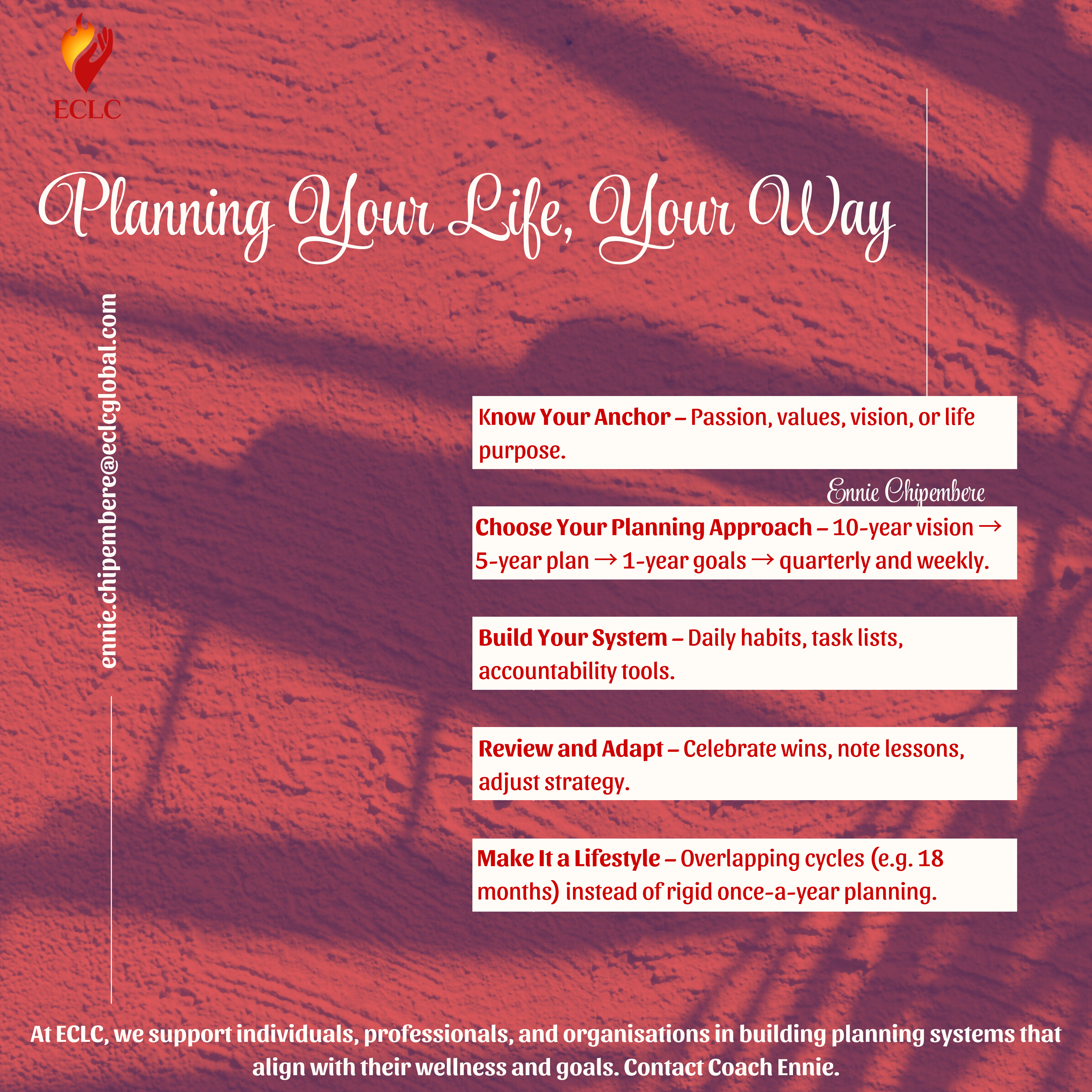
Not everyone is a fan of setting goals, creating plans and setting up systems to support achievement—but I do. I believe in one way or another we all rely on some form of guidance for our lives: whether for a year, a month, a week, or even a single day. Over the years, several coachees have approached me to support them with guidance on structuring their aspirations and daily routines. Many want to improve their personal management, others seek to use their time more efficiently, balancing their work with wellness, and others simply want a plan that gives their time on earth a greater purpose.
Our approaches to planning are as varied as we are. For some, planning begins with passion: knowing what they love and letting that guide their daily decisions and actions. For others, it’s about living a meaningful life aligned to their life purpose, a deeper reason of why they exist . Another group takes a vision-based approach, defining what they want to accomplish in the next 10+ years, what legacy they want to leave behind. Some root their planning in core values—deep-seated beliefs that shape their decisions. Others prefer structured timelines, breaking a 10-year vision into a 5-year plan or strategy.
The most common planning cycle is the rush of newness we experience in January that triggers many to set resolutions and develop a one-year plan and goals. My preference is a recurring and overlapping cycle of 18-month plans, within which my one-year plan sits. This is a tactical or operational level of planning, which can be refined into quarterly projections, monthly plans, weekly targets, and daily task lists. Finally, there are those like myself who combine all these approaches. Yes, it can feel like a lot, but when practiced consistently, it becomes second nature; not just something you do, but part of who you are.
In this blog, I will share guidance on how to do a detailed plan review that is useful for any of these approaches, but more specifically for those who use a structured goal-setting system and follow cycles of review and re-planning.
WAYS TO REGULARLY REVIEW YOUR PLAN
No matter how you approach planning, it helps to have a review process as a way of checking in on how you are doing. Just like there are many ways to plan, there are also many ways of reviewing plans.
- Self-observation, reflection and self-reporting: One of the simplest method of tracking your progress and taking note of lessons and achievements to celebrate. This can be achieved by doing regular reflections, noting lessons and pausing at set moments e.g. monthly to adjust course and celebrate wins.
- Journal writing: Writing things down is another powerful tool of regular reflection and capturing of your process of change, progress towards set goals and recording how your life is unfolding in general.
- Feedback from Others: Sometimes, we need other people to hold up a mirror. Feedback can come from a close circle of trusted people, or from voices you don’t usually hear from. This matters because we all have blind spots. In fact, Joseph Luft and Harrington Ingham’s Johari Window tool highlights exactly how valuable outside perspectives can be. If you choose this approach, it helps to be proactive—let people know what you’re working on and ask them to share observations at intervals that work for you (weekly, monthly, or otherwise).
- Accountability Partners or Groups: Another option is to intentionally involve someone—or a group—whose opinion and time you value. By checking in with them regularly about your goals or areas of change, you create accountability. The key is choosing people who will show up consistently and give you honest feedback.
- Other sources of feedback: Similar to the bullet above, you also get feedback from teams you work with, your line manager or team leader, from clients or people you serve or interact with. This can be proactively sought or found in reports and other feedback mechanisms that are part of work, projects and business services or products provided e.g. testimonials or referrals.
- Technology and data: Lastly, technology can be a huge ally. From wearables that track exercise, to phone apps that monitor sleep, finances, or screen time, to built-in analytics on platforms like social media or Microsoft Teams, there are countless ways to get data-driven insights. Many of these tools give you daily information and even run analytics automatically, making it easier to track progress toward your wellness, work, or lifestyle goals.
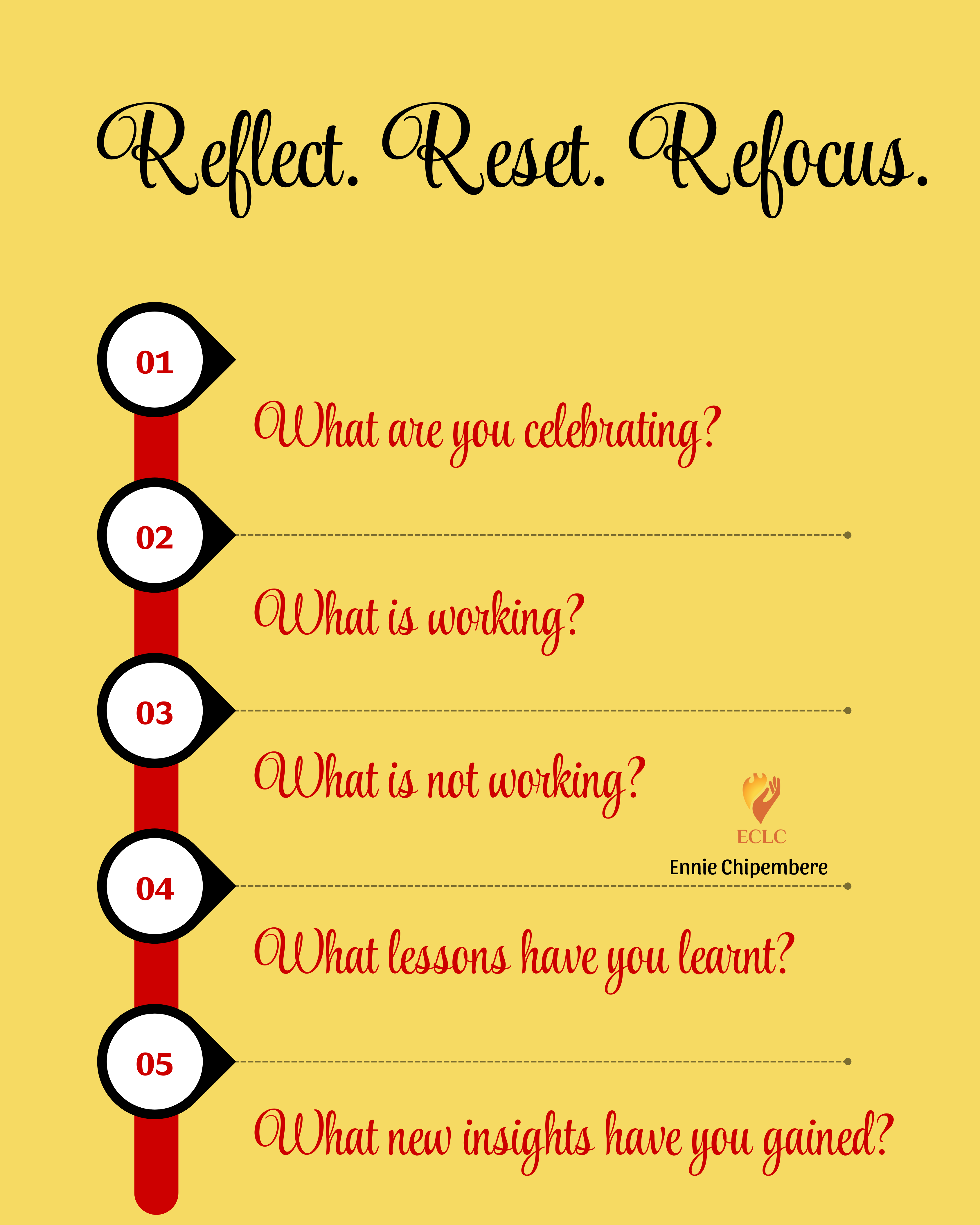
PLAN REVIEW GUIDE – SELF-COACHING RESOURCE
To get the most out of your planning process, it helps to think about how you will review the plan. That way, you are gathering data along the way, instead of waiting until the end and feeling overwhelmed.
A good first step is to list your goals and then pull together all the information you can, using some of the review methods we covered earlier. Once you’ve done that, set aside some quiet time to reflect. Use the questions below as a guide to check in on your progress so far and shape what comes next:
- ACHIEVEMENTS: what have you achieved to date – for each goal?
- WORKING: what’s working well for you – for the actions you set for each goal?
- NOT WORKING: what’s not working as planned – for the actions you set for each goal?
- LEARNING (Personal Development): how have you developed yourself and note as lessons?
- ACCOUNTABILITY: what’s your accountability mechanism and how has it been helping you and your goals?
- HABITS: what’s your review of the habits you had to develop or strengthen for your goals?
- SYSTEMS: what’s your review of the systems did you use or set up to support your goals? What’s your review of this?
- REWARDS (Motivation): how did you stay motivated and reward yourself?
- LESSONS: what are your key lessons?
- PLAN GOING FORWARD: what do you plan to do in the next period of action for your goals e.g. over the next month, 3 months, 6 month or even a year?
The depth of your review is really up to you. What is important is being honest with yourself and cross-checking your reflections against feedback from others and any data you have been tracking (whether from journals, feedback tools, or technology). Wherever possible, back up your notes with evidence. Once you have completed your review, the natural next step is to plan again; building on what you have learnt. To help with this, I have also created a Planning Guide with 10 questions designed to turn your review into a strong foundation for your next cycle of action.
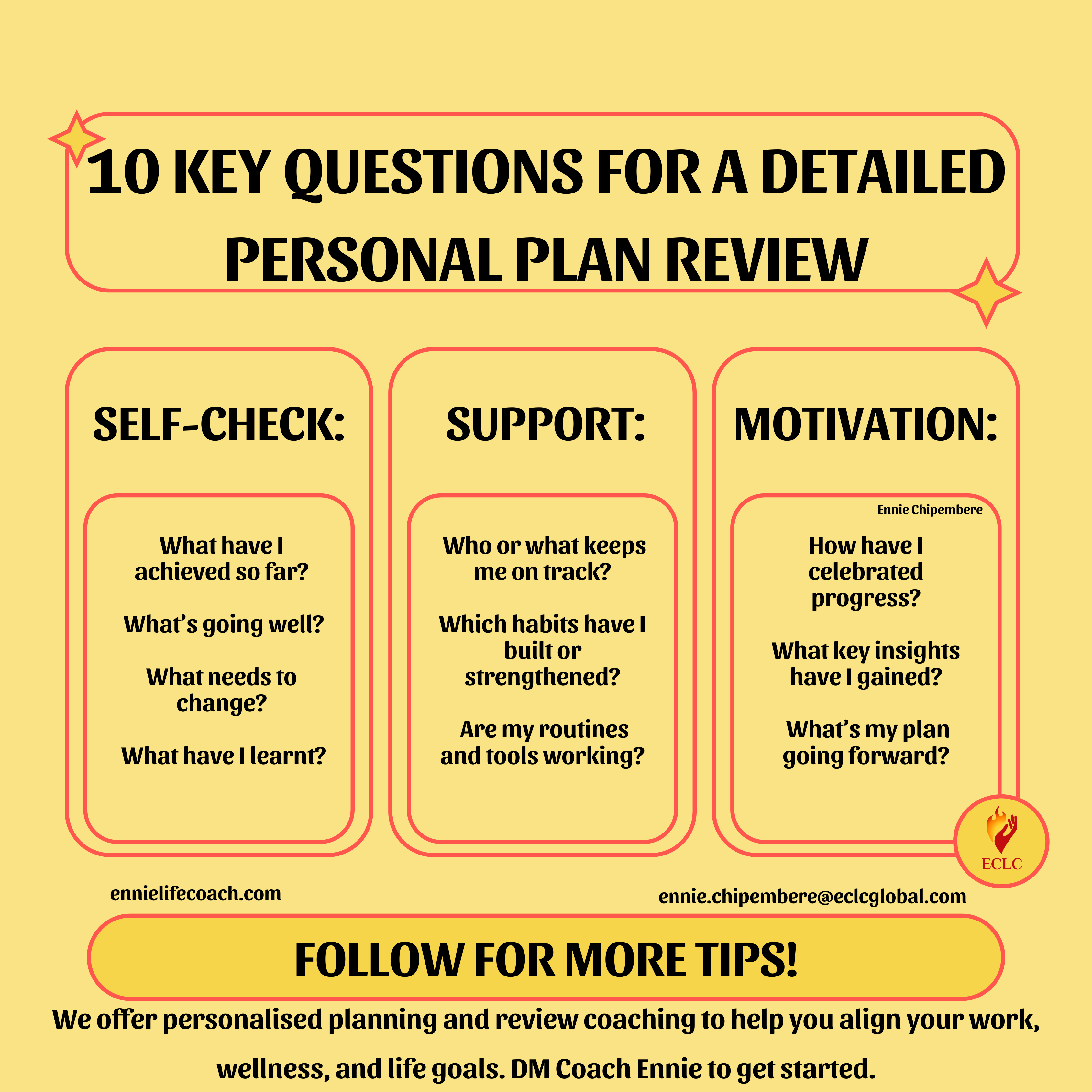
PLANNING GUIDE – A SELF-COACHING RESOURCE
Here are 10 helpful questions to guide you as you plan for your next period of action. These align with the same 10 areas from the review stage, so you are building directly on what you have learnt:
- CONTINUE: What should you continue doing or do differently?
- STOP: What should you stop doing?
- START: What should you start doing (new)?
- LEARNING (Personal Development Plan): What’s your learning commitment for your next period of action to support your goals?
- ACCOUNTABILITY: How will you hold yourself accountable?
- HABITS: What habits do you need to develop or strengthen to support your goals?
- SYSTEMS: What systems do you need to set up to help you achieve your goals e.g. morning and evening routine?
- REWARDS (Motivation): How do you plan to stay motivated and reward yourself
- LESSONS: How will you capture lessons on an ongoing basis?
- PLAN IMPLEMENTATION: How do you plan to work on your goals in small, incremental steps e.g. using a weekly plan and using a daily tasks list?
Just like the review process, it is important to plan not only your actions but also how you will track and review them. Think about the tool, methods, or support systems you will use to gather feedback along the way. At first, this may be difficult, but it does get easier with practice. Over time, it becomes a natural part of how you organize and manage your life.
CONCLUSION:
As you can see, planning, review, noting lessons, adjusting and planning again forms a continuous cycle. It’s a cycle you can shape for yourself to improve personal management and to achieve what truly matters in your life. We are all different. What works for me, Coach Ennie, or for someone else, may not be exactly what works for you. The key is to define your own approach while staying open to learning and change along the way. And if you would like some support in building this cycle of personal leadership and management, feel free to reach out, I would be glad to help.
Reflection Question:
Looking at your own life right now, which approach to planning and reviewing feels most natural to you—and what small step could you take today to begin shaping a consistent cycle of planning, review, learning, and re-planning that truly works for you?
JOIN THE COACH ENNIE & ECLC CAREER GROWTH COMMUNITY
Gain access to tools, tips, and a supportive space to explore your values and discover how they align with your life and career journey.
 Join the WhatsApp Community here:
https://chat.whatsapp.com/CI1MEbdzX2G0zMvsZHNvdq
Once inside, join groups that are tailored for your journey:
1. Career Planning, Development and Management
2. Leadership Development and Team Building
3. Wellness-Centred Life Planning and Personal Management
4. NGO Workers: Career Coaching and Advice
5. Job Search and Employability Support

Written by: Ennie Chipembere Chikwema
Coach, NGO Institutional Development Consultant and ECLC Director
E-mail: ennie.chipembere@eclcglobal.com
LinkedIn Profile: https://www.linkedin.com/in/ennie-chipembere-chikwema/
Facebook Page: https://www.facebook.com/EnnieCareerCoach
X: @EnnieChipembere
Discover more from Empowering Coaching, Learning and Consultancy
Subscribe to get the latest posts sent to your email.
