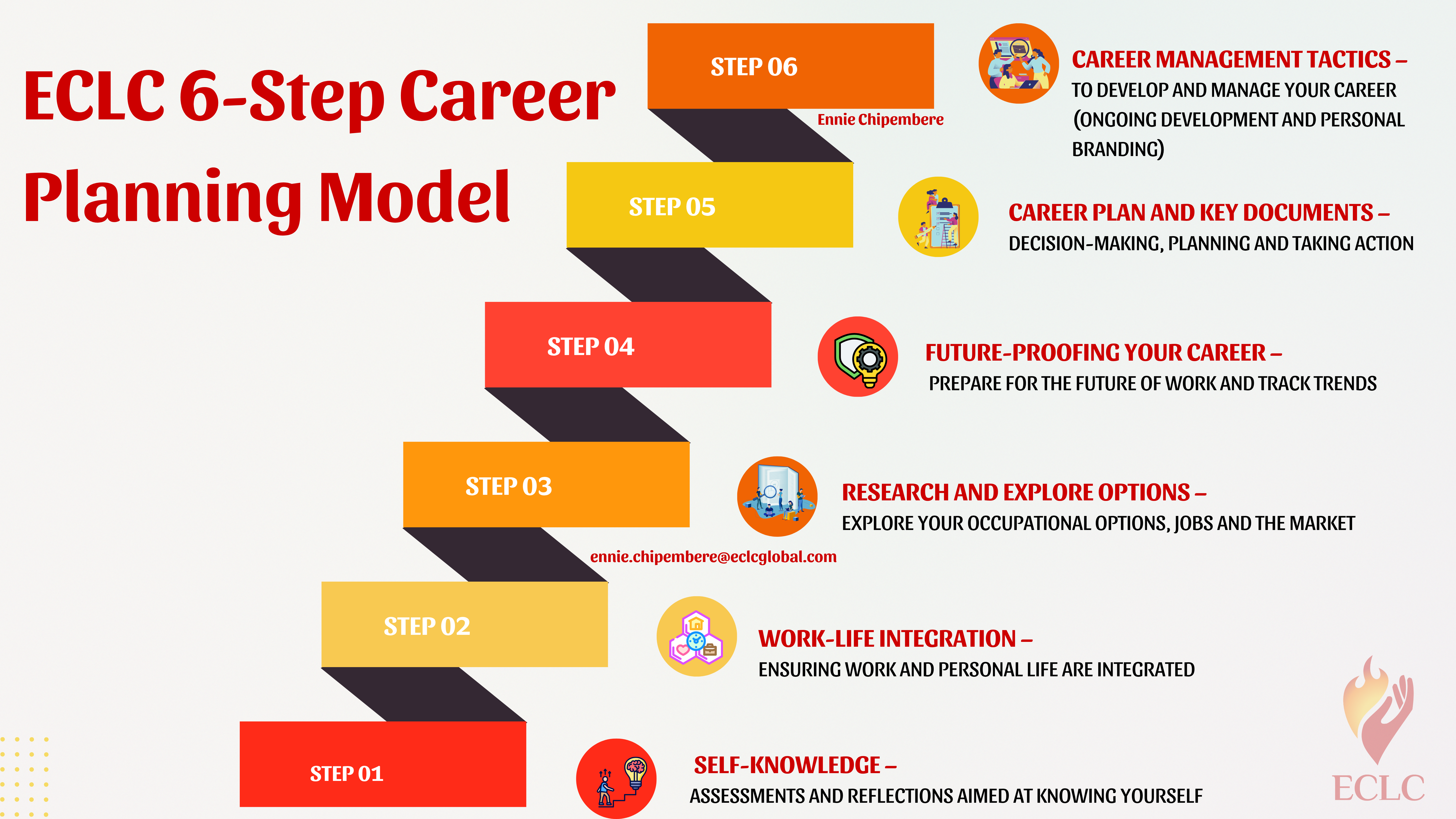
As a Career Coach, I regularly receive queries from people searching for guidance on mapping a meaningful career journey. Whether you are exploring job opportunities, planning a career transition, deciding on educational pursuits, or preparing for interviews, the modern career landscape demands a holistic and dynamic strategy. My approach is guided by six main entry points, namely, self-knowledge, wellness-centred work-life integration, career research and exploration, digital futureproofing, decision-making and career planning, as well as proactive career management tactics.
The purpose of this blog is to share the ECLC Career Planning Model, detailing its six steps and outlining key considerations for each. Designed as a practical tool, this guide raises your awareness of and informs career decisions and actions. Remember, career planning, development, and management is not a linear process but a continuous cycle of taking actions, reviewing, learning and adaptation.
WHAT IS A CAREER, CAREER PLANNING AND A CAREER PLANNING MODEL?
A career is not just a job—it is every type of work you do. A broader definition of a career recognises all activities, from paid professional roles to unpaid work like childcare or household management. Every contribution supports your personal and professional growth, and it deserves recognition and should be valued. At its core, a career is the lifelong journey of a person’s work experiences, professional and life roles, learning, and personal growth, shaped by their life purpose, values, interests, personality, skills, passions, and evolving life circumstances.
Career planning is the intentional, ongoing process of regularly setting professional goals, identifying the steps and resources needed to achieve them, and reflecting and adjusting those goals in response to changing interests, job markets, and life circumstances.
A career planning model is a step-by-step guide that helps you to plan your career based on a particular approach or worldview.
The above three definitions help strengthen your career development and learning. The ECLC 6 Steps Career Planning Model will help you know, understand and be supported in making good career decisions and taking actions toward a career that truly resonates with your purpose.
6-STEPS IN THE ECLC CAREER PLANNING MODEL
This section details the 6 steps of the career planning model, and it provides key actions to take.
STEP 1: SELF-KNOWLEDGE – ASSESSMENTS AND REFLECTIONS AIMED AT KNOWING YOURSELF
Self-Knowledge is the foundation of making successful career decisions and taking any actions that are aligned to who you are and what is important to you. Unfortunately, this is the most neglected and least valued input into career goals, decisions and actions. For most people it is the murky and unclear water that we just do not go near. Yet, the outcome of an aligned occupation and job, which is meaningful and where our best self comes out for us to succeed, lies in self-knowledge and using it.
Some key considerations in this step include knowing your: – passion, purpose, vision, values, interests, personality and skills. In an age where digital tools such as AI-powered personality assessments, these can offer deeper insights to strengthen your self-knowledge. An example of a resource you can use to assess your career interests is the O*Net Interest Profiler (https://www.mynextmove.org/explore/ip).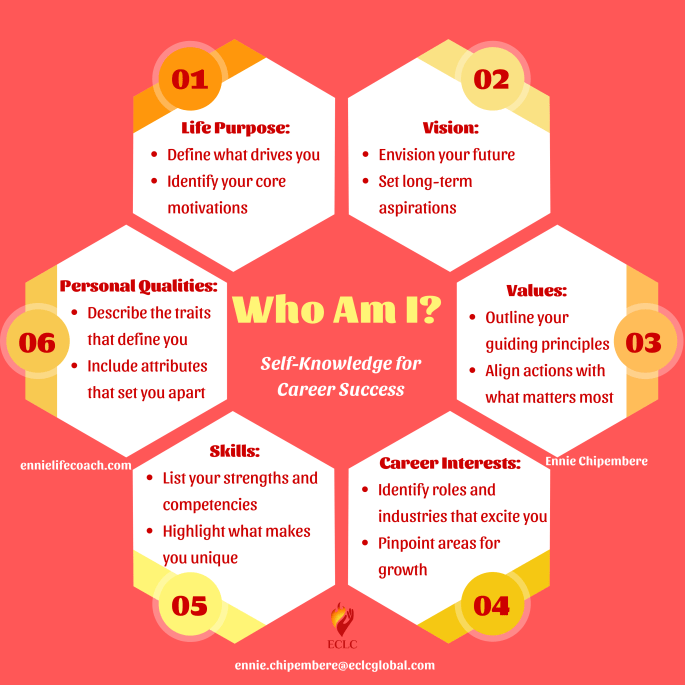
STEP 2: Wellness CENTRED WORK-LIFE INTEGRATION – ENSURING WORK AND PERSONAL LIFE ARE INTEGRATED
Gone are the days of strict separation between our work and personal lives. The reality is that there is more integration between work and personal life as many people aspire for harmony and a good working system between the two. This is popularly known as work-life balance, but I promote wellness centred work-life integration as balance is an impossible aspiration to achieve.
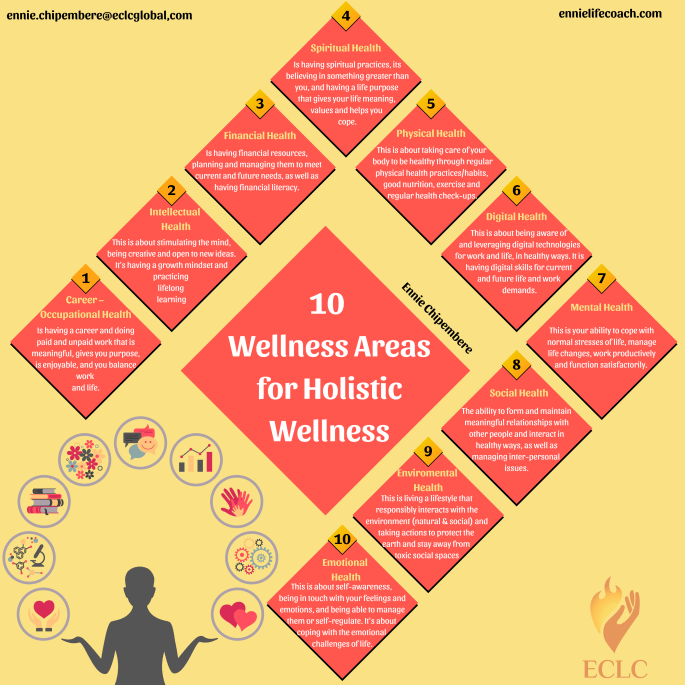
This means when developing your career plan, consider what is important to you in terms of your social, spiritual, physical, emotional, and mental health as well as your personal development and financial management. The goal is to design a lifestyle where flexible work options and your life needs are central. A tool you can use to help you with this is the Wheel of Life.
STEP 3: RESEARCH AND EXPLORE OPTIONS – EXPLORE YOUR OCCUPATIONAL OPTIONS, JOBS AND THE MARKET
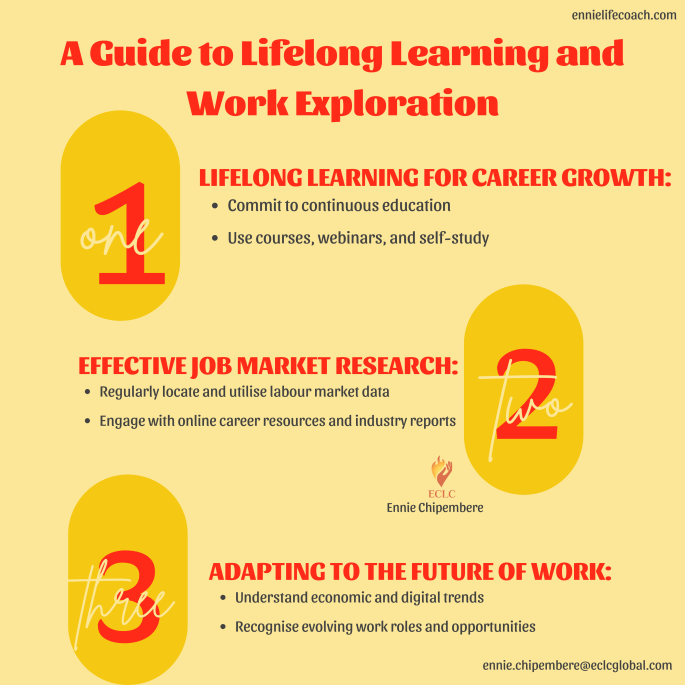
The first two steps of the model are about generating data that is focused on you. Steps 3 and 4 are about gathering data from the external context, job market, and potential employers. To conduct and gather information about the market as well as occupational options aligned to who you are and your skills. The data generated will help you make informed decisions in terms of job search, choosing a career path, deciding what to study, where to work and how to keep up with trends.
The career research information that you need includes industry and sector knowledge – opportunities and trends, labour market information, jobs outlook – employment and unemployment statistics, labour trends, influences on the labour market like demography, skills in demand, gaps, national, regional and global labour market exploration, country context – socio-political context, legislation.
To understand the job market, your research can include job sources mapping; job tasks and competency requirements – skills, education, salary and benefits – scales and growth path, job trends and contacts in network to connect and support, and company or organization research.
STEP 4: FUTURE PROOFING YOUR CAREER – PREPARE FOR THE FUTURE OF WORK AND TRACK TRENDS
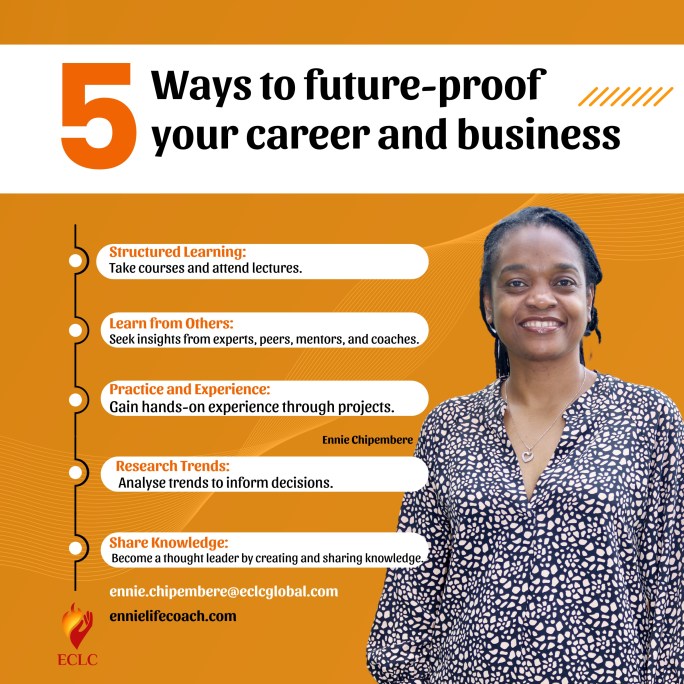
This step is about considering the future to inform both your immediate needs and being ready for what is coming. It is about future-proofing your career and knowing the key concepts within the Fourth Industrial Revolution that have a huge impact on the future of work and the technological impact on careers, jobs and livelihoods.
Some key considerations in this step include tracking career and digital trends to learn about and consider the impact of the following on your life, career, business or job: – artificial intelligence (AI), automation, internet of things (IoT), robotics, virtual reality (VR), augmented reality (AR), digital ethics and using social media to support your career and life goals.
Three key tasks to do in this step are: developing a digital vision for your career, tracking digital trends that can impact your career and sector, identifying and developing digital skills you need to upskill to remain competitive in an ever-evolving work landscape.
STEP 5: CAREER PLAN AND KEY DOCUMENTS – DECISION-MAKING, PLANNING AND TAKING ACTION
In this Step, you use the insights gained from Steps 1-4 to make some decisions and develop your career plan. Career decision making is the process of choosing between different career paths, job opportunities, or developmental directions based on personal values, interests, strengths, life circumstances, and external opportunities. It involves evaluating your skills, preferences, priorities, and goals, and making intentional, informed choices about your professional journey.
It is both a rational and an emotional process — requiring you to align what makes sense logically with what feels meaningful, motivating, and fulfilling for you.
Based on the data from Steps 1-4 and the career decisions you would have made, your next action is to develop a career plan. Your career plan should have 10 key components:
- Self-knowledge (key things from Step 1)
- Holistic health, wellness and well-being (priorities from Step 2)
- Career research and job market context (highlights from Step 3)
- Career future-proofing and digital trends (information from Step 4)
- Career goals and success indicators: these are at three levels: operational plan -Short-term goals (6 months–2 years), strategic plan – Medium-term goals (3–5 years), career vision – Long-term goals (5–10+ years).
- Key Actions – Define specific, measurable actions you will take to move toward your goals (e.g. projects, courses, networking, mentorship, side gigs).
- Timelines and Milestones – clearly state when you achieve each milestone or goal. Include information
- Personal development plan – Skills and Competencies to Build
- Resources and Support – e.g. tools, relationships, and opportunities to support your growth?
- Review and Adjust – state when and how you will reflect on your progress and adjust your plan as life and the job market evolves.
A career plan is like your personal career GPS — guiding your decisions, actions, and learning along a path that makes sense for you.
STEP 6: CAREER MANAGEMENT TACTICS – TO DEVELOP AND MANAGE YOUR CAREER (ONGOING DEVELOPMENT AND PERSONAL BRANDING)
Even after developing your career strategy/approach, and plan, you still need to take various actions using different tactics to manage or direct you career as desired.
“Career tactics are actions to maintain oneself in a satisfactory employment situation. Tactics may be more or less assertive, with assertiveness in the work situation referring to actions taken to advance one’s career interests or to exercise one’s legitimate rights while respecting the rights of others.” [source]
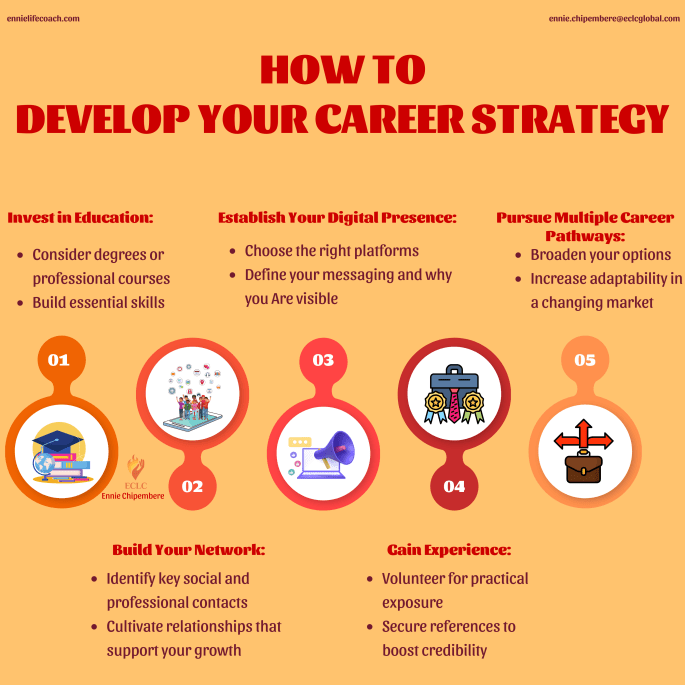
Some key considerations in career management tactics include learning about, developing and using:- a career identity, career story, social media profile and strategy, lifelong learning, network building and networking and skills for succeeding at work.
CONCLUSION:
Career development and management is a lifelong process that adapts as the world of work and personal life changes. The 6 steps in this ECLC Career Planning Model are not linear but can be used as a flexible guide depending on what your evolving goals and the future of work. Remember, the more information you are about yourself and your context the better you are positioned to make decisions, formulate plans and take actions to a fulfilling career.
Ready to take the next step in your career journey?
Start by applying the ECLC Career Planning Model to your unique life and work context. Whether you are at a crossroads, in transition, or seeking growth, these six steps are your foundation for futureproof, purpose-driven decisions. Reflect. Plan. Act.
Not yet a part of the Coach Ennie & ECLC Community and need support along the way?
Join our WhatsApp Community to access tools, tips, an real-time support:
Join here: https://chat.whatsapp.com/CI1MEbdzX2G0zMvsZHNvdq
Once inside, join groups that are tailored for your journey:
1. Career Planning, Development and Management
2. Leadership Development and Team building
3. Wellness-Centred Life Planning and Personal Management
4. NGO Workers: Career Coaching and Advice
5. Job Search and Employability Support

Ennie Chipembere
Coach, NGO Institutional Development Consultant and ECLC Director
E-mail: ennie.chipembere@eclcglobal.com
LinkedIn Profile: https://www.linkedin.com/in/ennie-chipembere-chikwema/
Facebook Page: https://www.facebook.com/EnnieCareerCoach
X: @EnnieChipembere
Discover more from Empowering Coaching, Learning and Consultancy
Subscribe to get the latest posts sent to your email.

Great six-step model! Covers self-awareness, research, future-proofing, integration, planning, and career tactics practical roadmap for thoughtful, actionable decisions.
LikeLiked by 1 person
Love the holistic approach of the ECLC model! Emphasizing self-knowledge and wellness-centered integration really sets a strong foundation for meaningful, future-proof career planning. Thanks for sharing these actionable steps!
LikeLike