
I had the pleasure of being invited to the Graca Machel Trust to facilitate a learning session on Careers and Wellness for the entire staff. As I do with most career conversations, I start by asking about the participants about their personal definition and understanding of key concepts like career, career development, career planning, and career management. Many people still equate a career solely to their current job and view the annual goals they set for personal development as career development.
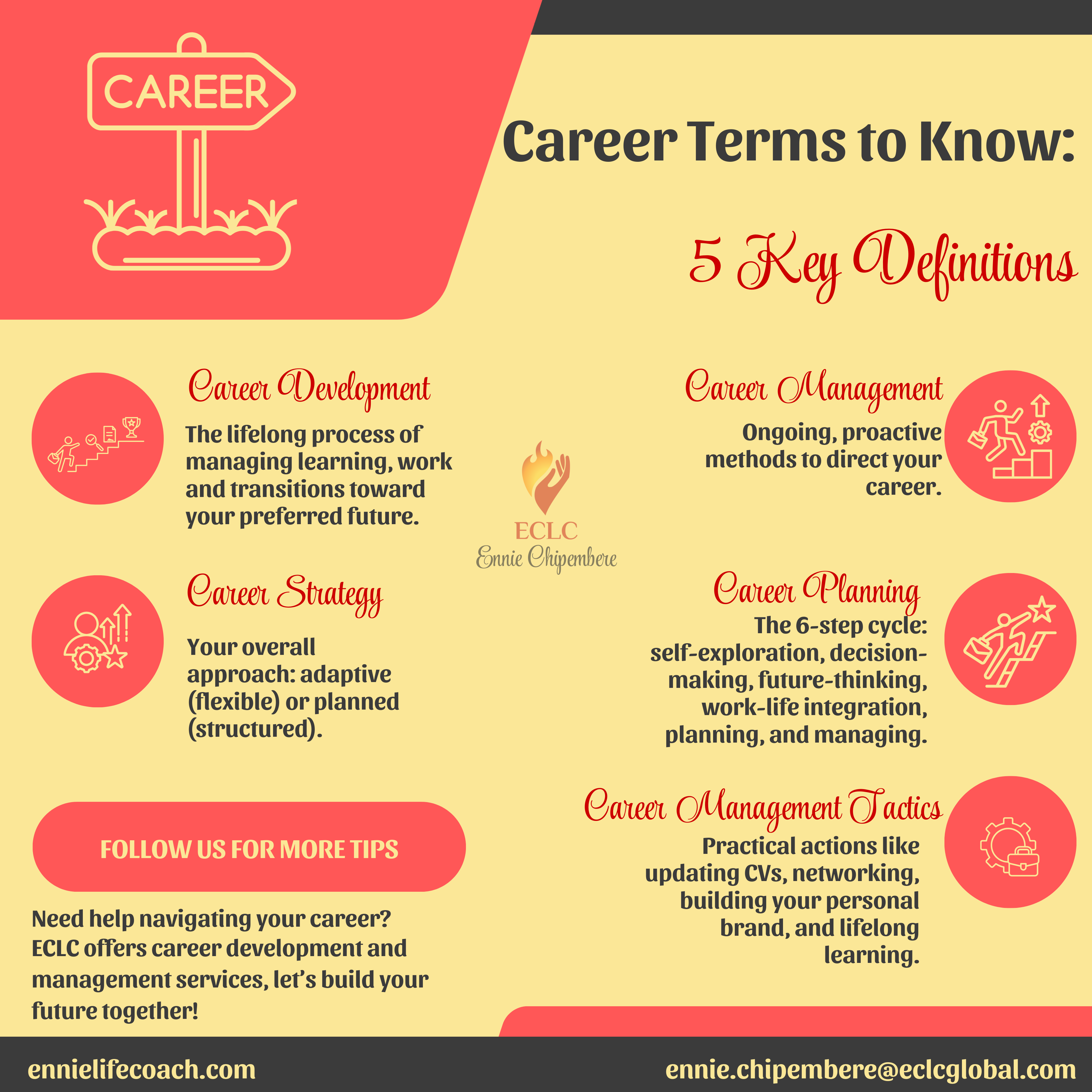
What has consistently proven useful is framing the world of work and careers around 5 essential terms. These include career development with its 5 key career and life transitions (career management, career strategy, career planning and career management tactics). I wrap up the session by sharing the value of understanding these terms to set goals, make decisions and take career actions.
Your Career – what does it cover?
In a blog aimed at helping people understand 5 key definitions from the world of work and careers, I defined what career, occupation, job, profession, industry/sector mean. Understanding the evolving definition of career is critical, as the following statement illustrates.
“Not so long ago, most people stayed in the same line of work for a lifetime. Back then, “career” was another word for “job.” The world has changed. Today, your career is the sum total of all your jobs (paid and unpaid), your education or learning activities and your life roles.” [source]
This expanded definition requires a mindset shift, moving away from the traditional that limits career to paid work only. Historically, unpaid or personal work was seen as separate from and a less valid part of one’s career. With this expanded definition of a career in mind, it becomes essential to reconsider we mean by career development, career planning, career management and career transition.
What is Career Development?
The Canadian Standards and Guidelines for Career Development Practitioners define career development as, “the lifelong process of managing learning, work and transitions in order to move toward your preferred future.” [source]
In my career sessions, I emphasise the importance of each term in this definition. First, it is a “lifelong process” meaning that when we talk about career development it is active and ongoing throughout our lives. Second, “managing” highlights how you intentionally direct your career toward your goals and the future you want. Finally, “learning, work and transitions”, points to the fact that “career development is the mechanism by which learning (formal and informal), work (paid and unpaid) and the transitions between are navigated.” [source]
Donald Super and the 5 Life and Career transitions
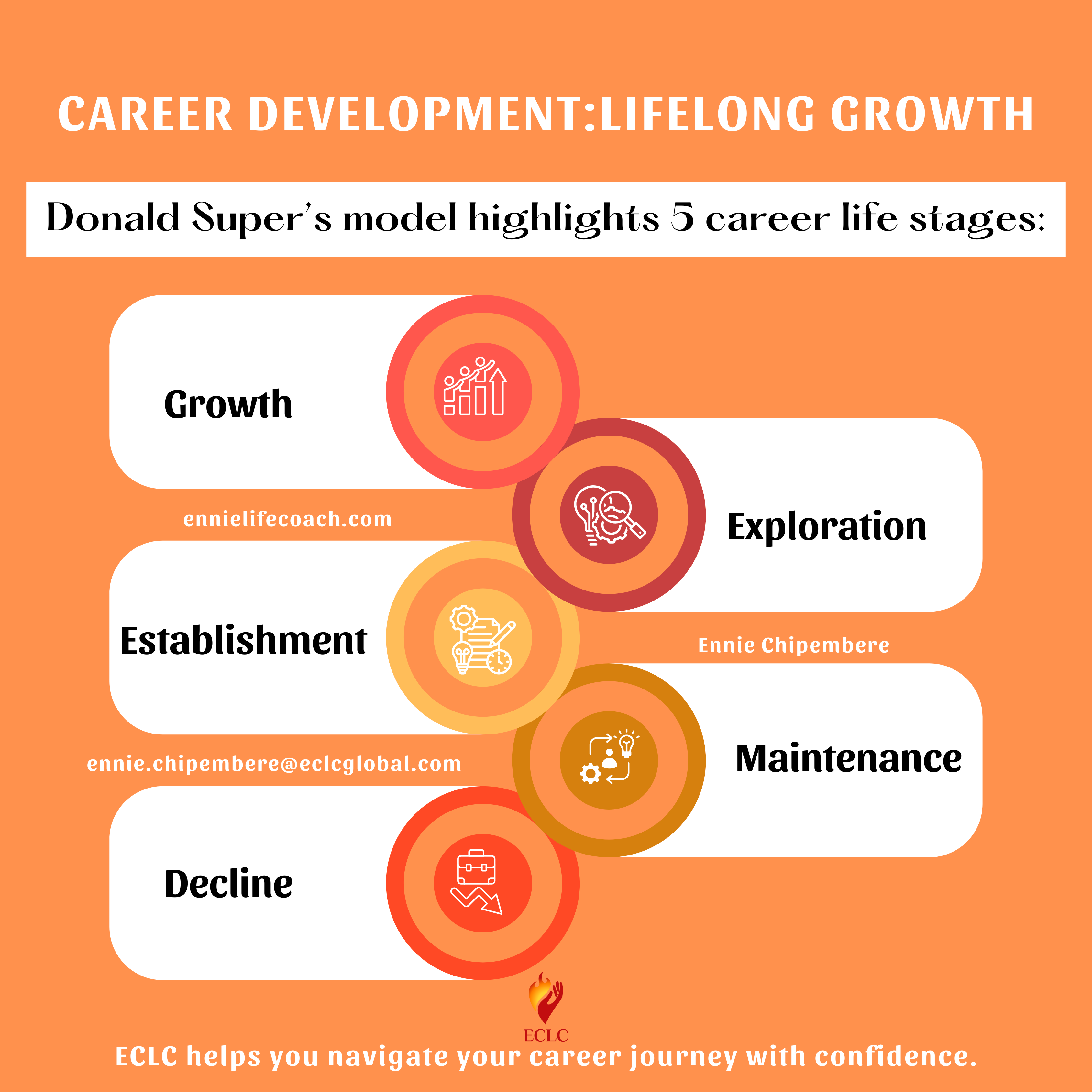
The transitions mentioned in career development encompass both work and life transitions. These are best understood through Donald Super’s career development model which states that we go through 5 life stages where our self-concept evolves due to experience. At each transition stage you have to take different career actions, reinforcing the lifelong nature of career development. The stages include:
- Growth (0-14 years)
- Exploration (15-24 years)
- Establishment (25-44 years)
- Maintenance (44-64 years)
- Decline (65+ years).
With advances in technology and longer life expectancy, many people increasingly cycle back to earlier stages even after the decline phase. Career changes are no longer strictly linear but more fluid and dynamic.
What is Career Management?
Career development spans a lifetime and evolves with each life stage. to navigate this process effectively, you need to be proactive, using specific methods to manage your learning, work and transitions. This is where the 4 interrelated terms come into play: career management, career strategy, career planning and career management tactics.
“Career management is the combination of structured career planning and the active management choice of one’s own professional career using a particular career strategy and career tactics.” [source] It is a lifelong, self-monitored process of strategy, tactics and career planning that focuses on choosing and setting personal goals and formulating strategies for achieving them. [source]
These three core components of career management will be defined in detail next.
- Career Strategy
- Career Planning
- Career Management Tactics
What is a Career Strategy – your approach?
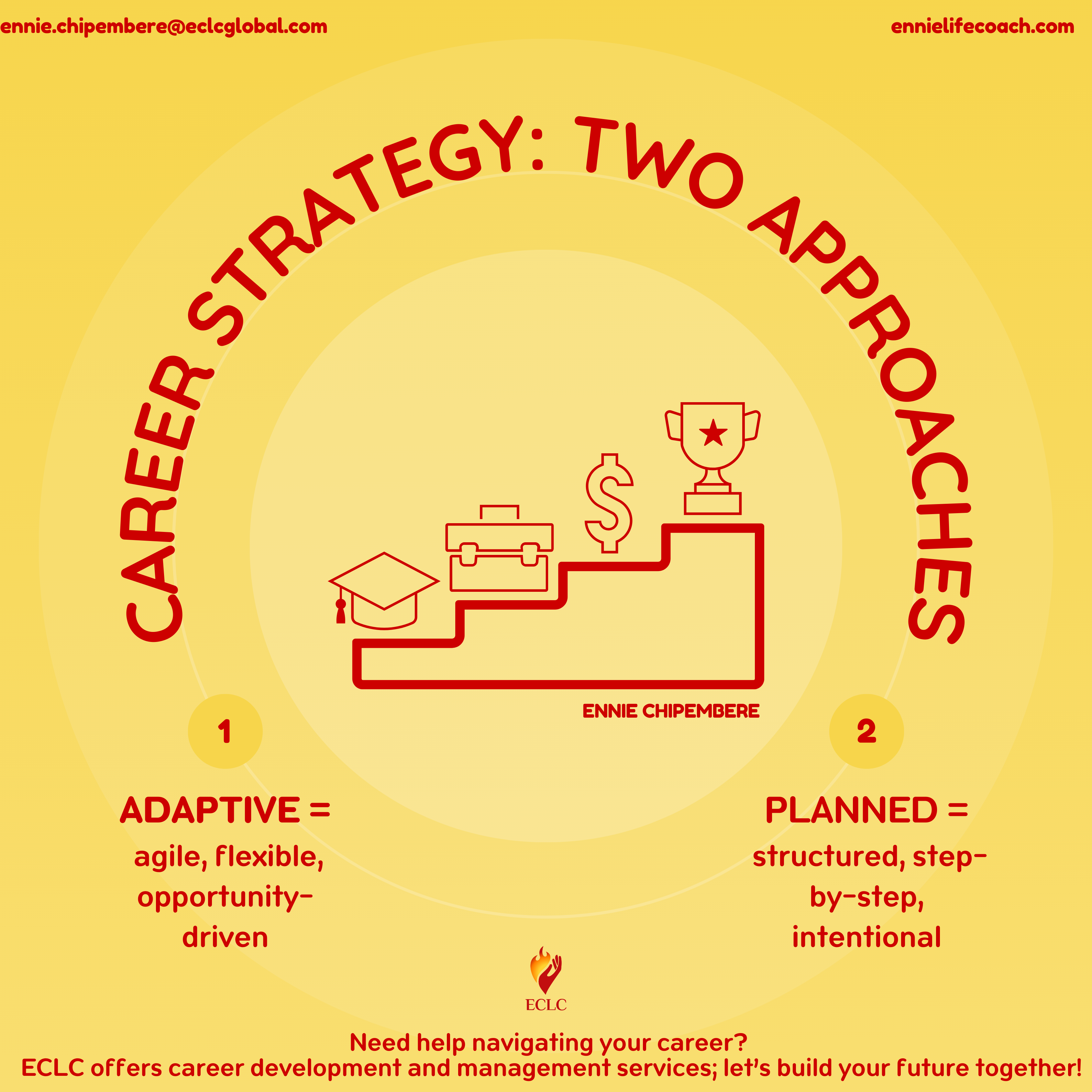
“Career strategy pertains to the individual’s general approach to the realization of career goals, and to the specificity of the goals themselves. Two general strategy approaches are adaptive and planned.” [source]
When you use an adaptive approach as a strategy to managing your career it means being agile and responsive to challenges and opportunities as they arise and using them to develop your career. This does not imply that one does not have career goals, rather, one remains flexible about how to achieve them. In contrast, a planned approach follows a more a step-by-step process, which does not mean the plans do not shift based on new information and emerging opportunities.
What is Career Planning?
“Career planning is a practical way to manage the ongoing changes in your life and work. It helps you build on what you already have and think realistically about your priorities.”
[source]
Career planning has 4 common steps, but I have added 2 more (step 3 and 4) due to their growing importance today and in the future, future thinking (preparing for the future of work) through career and digital trends tracking and “work-life integration (wellness and self-care). These 6 steps are the foundation of most career decisions, plans and actions: The 6 steps are:
- Self-exploration – know yourself
- Decision-making – explore your occupational options and decide – career/job research
- Future thinking – prepare for the future of work – tracking career and digital trends
- Work-life integration – wellness and self-care considerations
- Planning – plan and take action
- Career Management – develop and manage your career
Together these 6 steps make up the ECLC Career Development Model, meaning they are the basis of my career services and learning programs.
A solid career plan includes SMART goals and actions for achieving them. Since career development and management are lifelong processes, you will revisit and follow this career planning cycle continuously to navigate important life and work decisions.

What are Career Management Tactics?
When you are clear about your career strategy/approach, and have developed a plan, you still need to take specific actions using different tactics to actively manage or direct you career as you desire.
Career tactics are actions to maintain oneself in a satisfactory employment situation. Tactics may be more or less assertive, with assertiveness in the work situation referring to actions taken to advance one’s career interests or to exercise one’s legitimate rights while respecting the rights of others.
[source: https://en.wikipedia.org/wiki/Career_management]
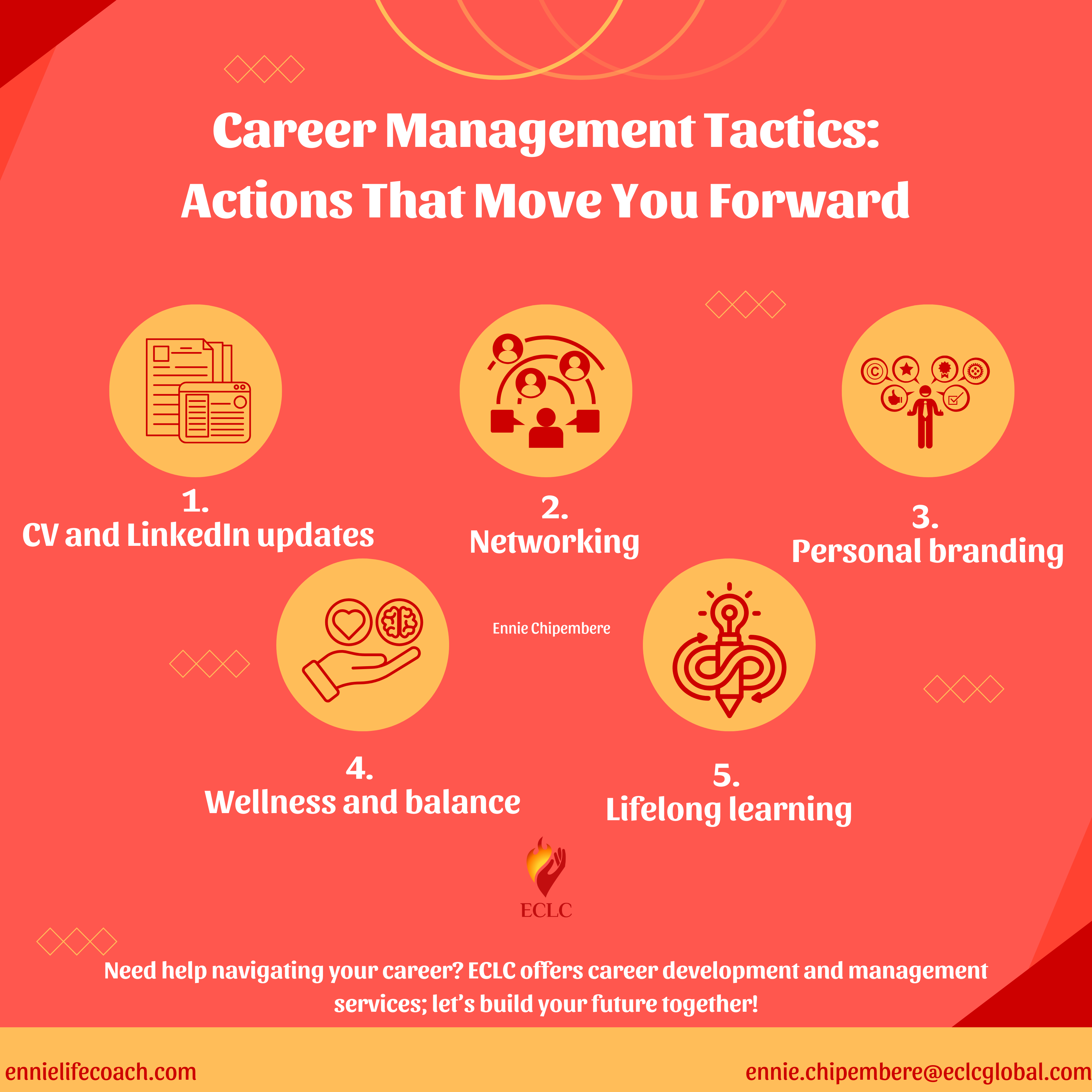
Common career management tactics include:
-
Developing your career story and identity
-
Building and maintaining your personal brand or profile
-
Keeping key career documents, such as your CV, updated
-
Networking strategically
-
Managing yourself holistically through life wellness practices
-
Managing your social media presence responsibly
-
Establishing yourself as a thought leader
-
Engaging in lifelong learning
-
Preparing continuously for the future of work
These tactics help you stay proactive and resilient in today’s dynamic career landscape.

Conclusion
It is clear from the exploration of these 5 career terms that to develop and manage your career successfully is not an ad hoc process, but needs to be intentional and proactive. You need to know and understand these concepts so that you are equipped to know how best to use them to your advantage. Once you are clear on what your career is, consider how you will develop and manage it, which career strategy or approach you will adopt, how you will plan for the future, and which career management tactics you will apply.
REFLECTION
How can you apply the five key career concepts—career development, career management, career strategy, career planning, and career management tactics—to proactively shape your career path in today’s dynamic work environment?
 JOIN THE COACH ENNIE & ECLC CAREER GROWTH COMMUNITY
Gain access to tools, tips, and a supportive space to explore your values and discover how they align with your life and career journey.
 Join the WhatsApp Community here:
https://chat.whatsapp.com/CI1MEbdzX2G0zMvsZHNvdq
Once inside, join groups that are tailored for your journey:
1. Career Planning, Development and Management
2. Leadership Development and Team Building
3. Wellness-Centred Life Planning and Personal Management
4. NGO Workers: Career Coaching and Advice
5. Job Search and Employability Support
 Written by: Ennie Chipembere Chikwema
Coach, NGO Institutional Development Consultant and ECLC Director
E-mail: ennie.chipembere@eclcglobal.com
LinkedIn Profile: https://www.linkedin.com/in/ennie-chipembere-chikwema/
Facebook Page: https://www.facebook.com/EnnieCareerCoach
X: @EnnieChipembere
Discover more from Empowering Coaching, Learning and Consultancy
Subscribe to get the latest posts sent to your email.

This is a good blog well defined and articulated to enhance the path of goal achievement in life .
LikeLike