


At any point you can and should negotiate your contract and benefits, however, the key is to do it strategically. Negotiation can feel uncomfortable for most people, but it is a critical career management skill.
There is also a gender dimension, research continues to show that men tend to negotiate more often than women, whether its new contracts, a promotion or a raise. The following 6 tips and a list of 15 benefits one can negotiate for will help you get started with confidence and clarity.
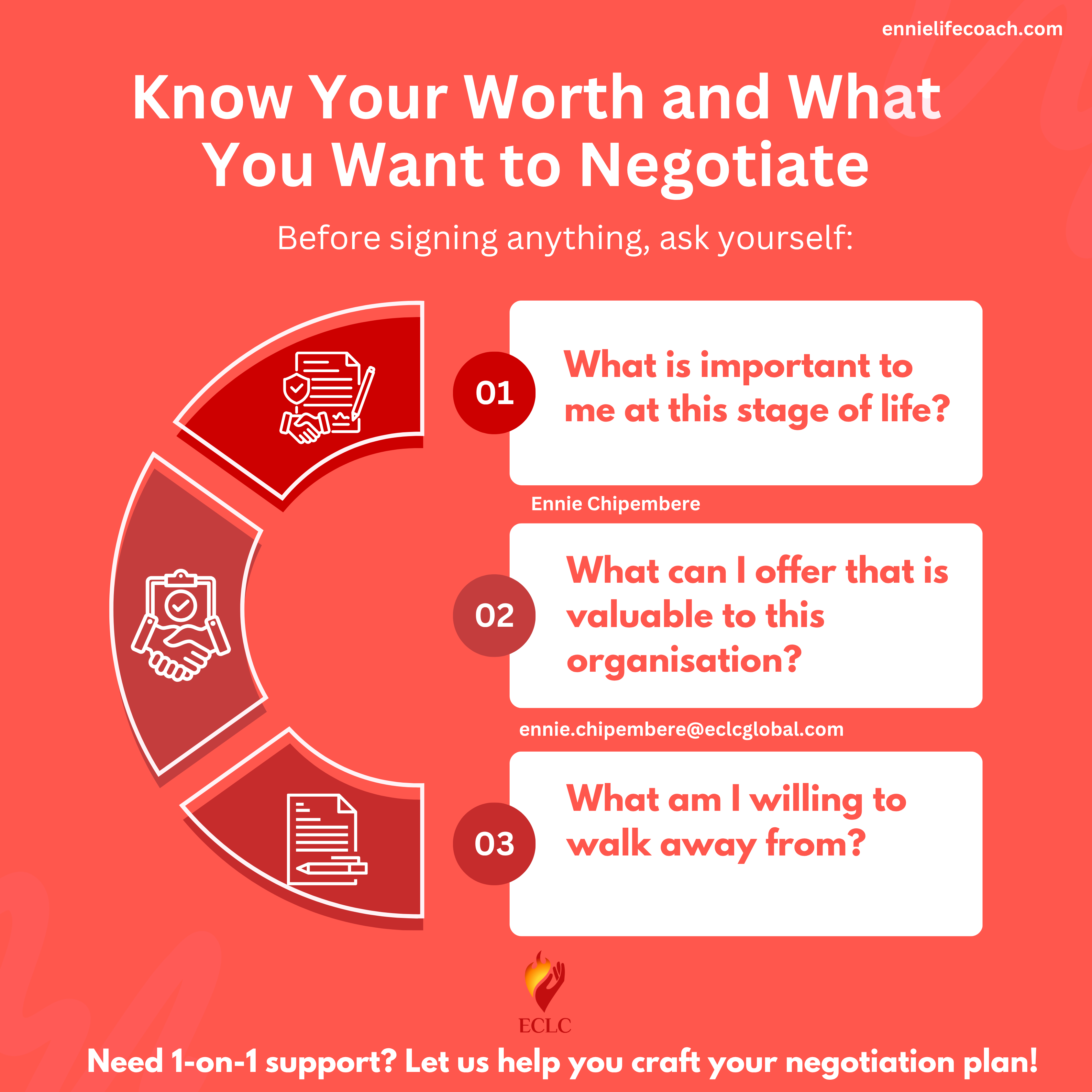
Tip 1 – Know Your Worth and What You Want to Negotiate
- Prepare mentally and practically to negotiate. Do not be quick to accept and sign an offer, even if you desperately need a job. You have been interviewed, you have passed and now you are collaborating on the finer details of the contract.
- Know your leverage. Consider what would strengthen your position such as perfomance, expertise, or a new contract.
- Be clear about what is important to you/your priorities. Is it a salary that covers your bills; flexible working hours or reduced travel.
- Identify your “walk-away” point. It is not useful to negotiate when it does not meet your needs. It is okay for you to step back.
Tip 2 – DO YOUR Research: What is Possible and Impossible?
Information is your greatest advantage.
- Research salary benchmarks. There are a number of free online tools and current salary surveys to find out what similar roles pay in your country or sector. (See reference list below.)
- Understand and ask for benefit flexibility. Ask you don’t waste time on areas that are non-negotiable for them. Despite this, still ask.
- Know the sector or industry standards e.g. corporate versus non-profit benefits.
- Know what the legal standard is in the country e.g. maternity leave benefit.
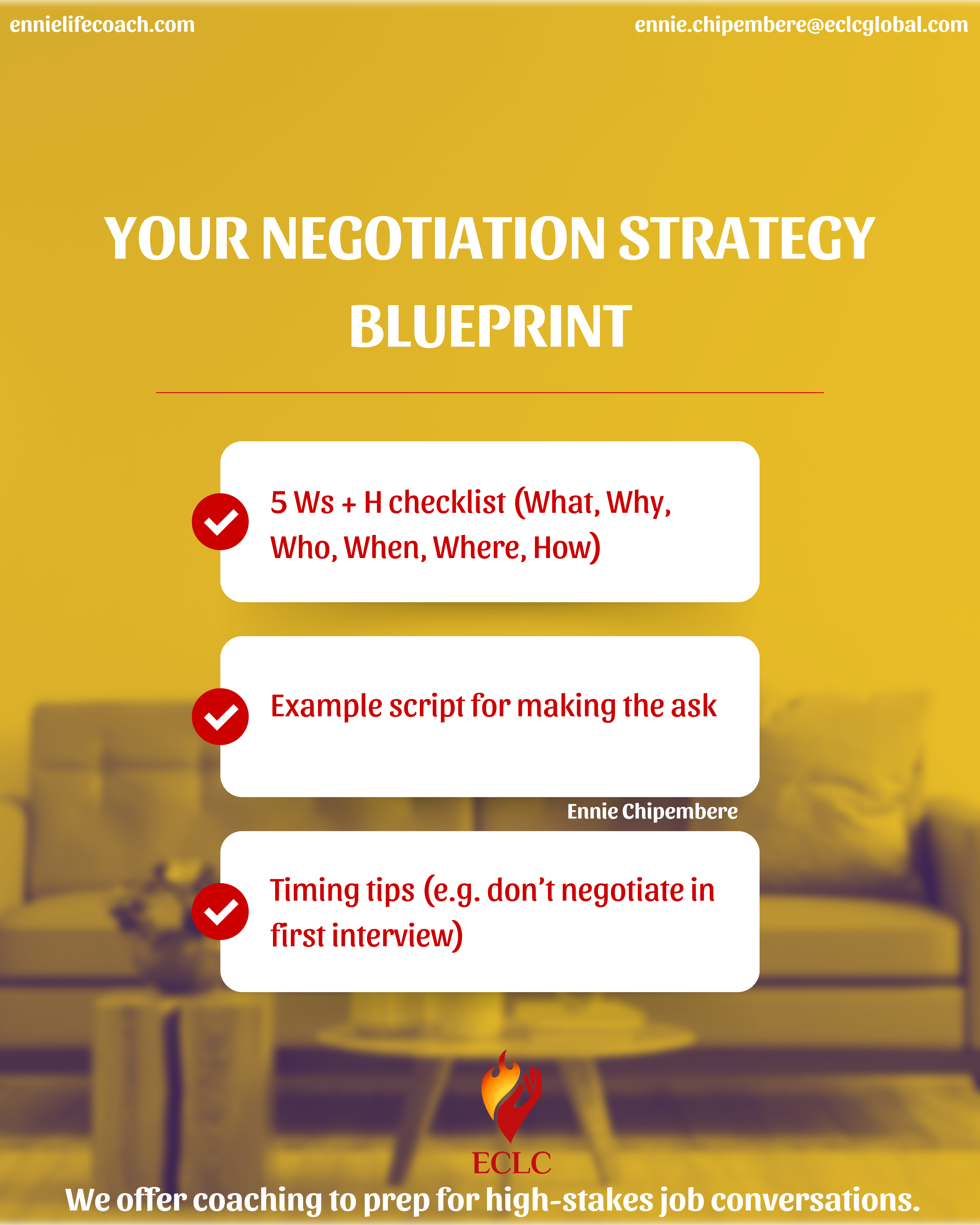
Tip 3 – Have a Strategy: it should answer – What, Why, Who, When, Where and How?
Negotiation without strategy is guesswork.
- For new contracts: Let the employer make the first offer and do not go into negotiation or ask about salary and benefits too early in the interview process.
- For a raise or promotions: Prepare your negotiation rationale and supporting evidence e.g. quantitative targets, awards and performance reviews. Make sure you know the politics involved and the decision-making process and timings.
- Your Strategy should have answers for the 5 Ws and an H: What, Why, Who, When, Where and How?
- Keep it win-win: The goal is not to “win” the negotiation but to reach an agreement that benefits both sides.
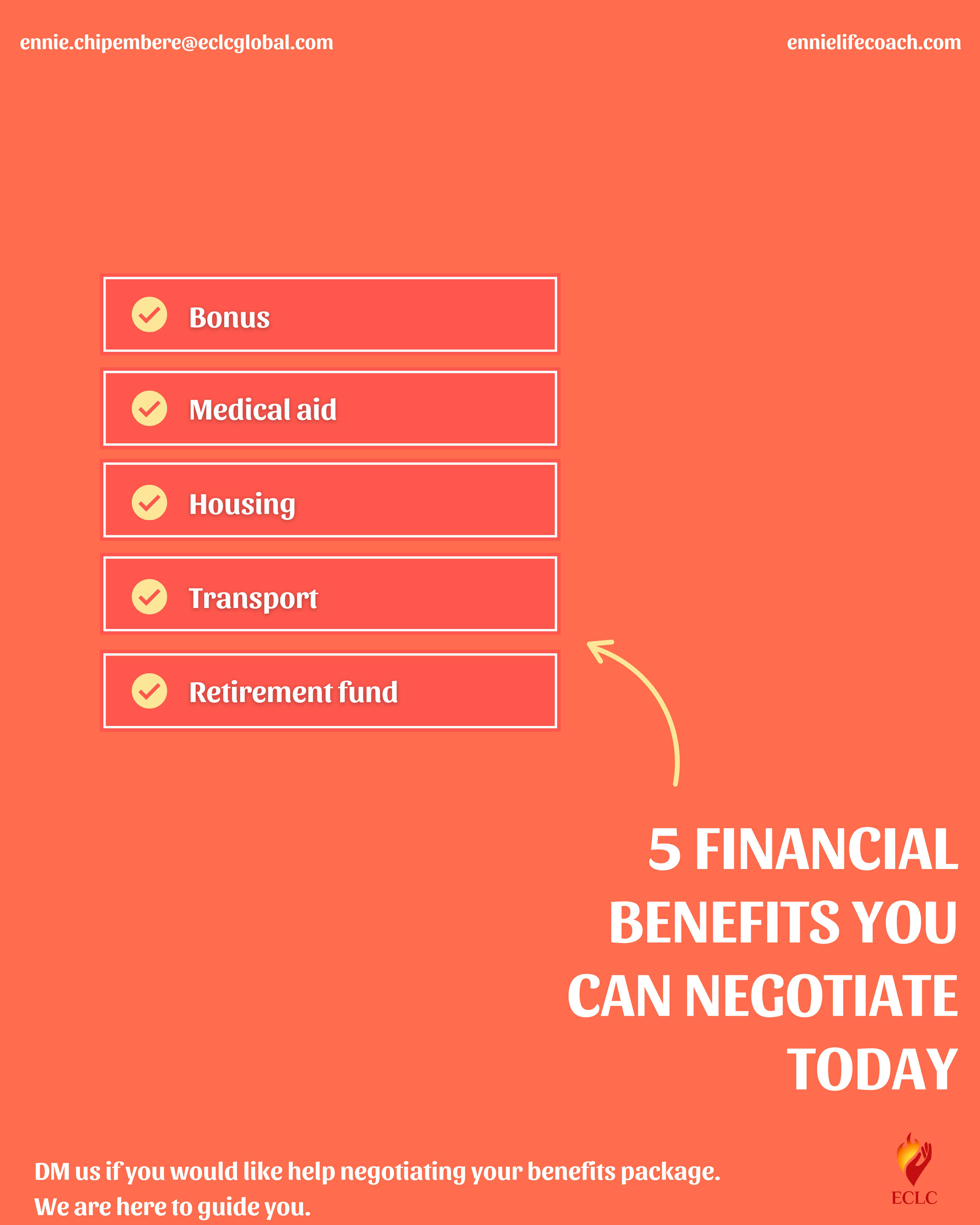
Tip 4 – negotiatiNG Financial Benefits
- Finances – research and benchmark the salary, negotiate for an end of annual cycle/year Bonus or 13th cheque; consider including a severance package added into your contract; ask about a sign on of a new contract and if relocating, request a relocation bonus or allowance.
- Matching Financial Contributions – these could be to a Retirement Plan/Fund; Life Insurance; Investment or Stock options etc. It all depends with the sector and the company, but it is worth understanding what is available.
- Health and Wellness – medical and dental allowance; gym membership; work showers; standing desk; ergonometric chair; mental health or psycho-social counselling support services etc. There is an increased focus on wellness in most organisations, it would be useful to you to ask what is available and negotiate for more if possible.
- Childcare – creche at work or childcare allowance; paid travel with child .
- Allowances – commuting costs allowance or is there transport provided e.g. car allowance; Housing allowance; travel for work allowance/ per diem; Acting or additional work responsibility allowance e.g. when Acting in another role that is not yours etc.
Tip 5 – NegotiatiNG Work Structure, Wellness and Days Off Benefits
Work–life integration has become a top priority in 2025. These benefits can be as valuable as salary.
- Working hours structure – work from home/ telecommute; flexi-time / flexible schedule; compressed working hours, or four-day schedules. These benefits may not be monetary, but they support you with better work-life integration and having greater autonomy over your time.
- Work tools – company provided cellphone and data allowance; laptop. These work tools are not a given in every organisation. However, if you are going to work flexi-time and telecommute, you need the company or organisation to support you.
- Paid time off – annual leave or personal days, volunteer or charity work leave and separate sick, family responsibility, and compassionate leave
- Parental leave – paid maternity and paternity leave, adoption leave equal to parental leave, and bereavement or miscarriage leave. Ensure this is all written in your contract.
Tip 6 – NegotiatiNG Personal Development Benefits
Continuous learning is one of the most valuable investments an employer can make in you.
- Professional development: Ask about training, education sponsorships, or professional association fees.
- Higher education support: Some employers pay for degrees or offer student loan assistance. Clarify repayment conditions and study leave.
- Sabbaticals: After a set number of years (often five), you may qualify for paid or unpaid extended leave.
- Role location and relocation: Negotiate relocation support for you and your family, including logistics and settling-in costs.
- Job title: Choose a title that reflects growth potential and aligns with industry trends for future career mobility.

REFERENCES AND RESOURCES:
SALARY BENCHMARKING RESEARCH – South Africa
- Salary Benchmarking – South Africa
South African Labour Standards
Negotiation and Career Development Articles
- Lindsey Lanquist, “17 Benefits (Other Than Salary) You Can Negotiate When You Take a Job” — SELF
- Career Contessa – Beyond Salary: How to Negotiate Your Benefits Package — careercontessa.com
- Amanda Augustine, “5 Benefits to Ask For in Your Next Salary Negotiation” — Payscale Guide
- Monster Salary Negotiation Guide
- Payscale: Negotiating for a Raise or Promotion
The Future of Negotiation
As we move deeper into the 2020s, negotiation is no longer just about pay. It’s about designing a sustainable, human-centred career. Whether it’s flexibility, wellbeing, or purpose-driven work, your voice matters. So, show up prepared, informed, and grounded in your worth.
The End!
REFLECTION QUESTIONS:
When was the last time you truly assessed your professional worth; not just in salary, but in how your work supports your wellbeing, growth, and future goals?
What would change if you started negotiating from a place of clarity, confidence, and self-value?
JOIN THE COACH ENNIE & ECLC CAREER GROWTH COMMUNITY
Gain access to tools, tips, and a supportive space to explore your values and discover how they align with your life and career journey.
 Join the WhatsApp Community here:
https://chat.whatsapp.com/CI1MEbdzX2G0zMvsZHNvdq
Once inside, join groups that are tailored for your journey:
1. Career Planning, Development and Management
2. Leadership Development and Team Building
3. Wellness-Centred Life Planning and Personal Management
4. NGO Workers: Career Coaching and Advice
5. Job Search and Employability Support

Written by: Ennie Chipembere Chikwema
Coach, NGO Institutional Development Consultant and ECLC Director
E-mail: ennie.chipembere@eclcglobal.com
LinkedIn Profile: https://www.linkedin.com/in/ennie-chipembere-chikwema/
Facebook Page: https://www.facebook.com/EnnieCareerCoach
X: @EnnieChipembere
Discover more from Empowering Coaching, Learning and Consultancy
Subscribe to get the latest posts sent to your email.

7 months into the Job, Imagine I had to come back to this article for reference awaiting a conversation with my employer. Thank you so much Ennie for the resources you share.
LikeLike